All posts in this category
Salty’s Studio
Category: Support independents
An impromptu visit to Ashburton during a family visit last week turned into a Decmatic field trip with an exciting discovery.
Ashburton is a cute old village on the borders of Dartmoor and is home to what appears to be the densest collection of antique and home decor stores outside or Chelsea Harbour. The discovery? Nestling among the antique shops was a little ray of modernity in the shape of Salty’s Studio.
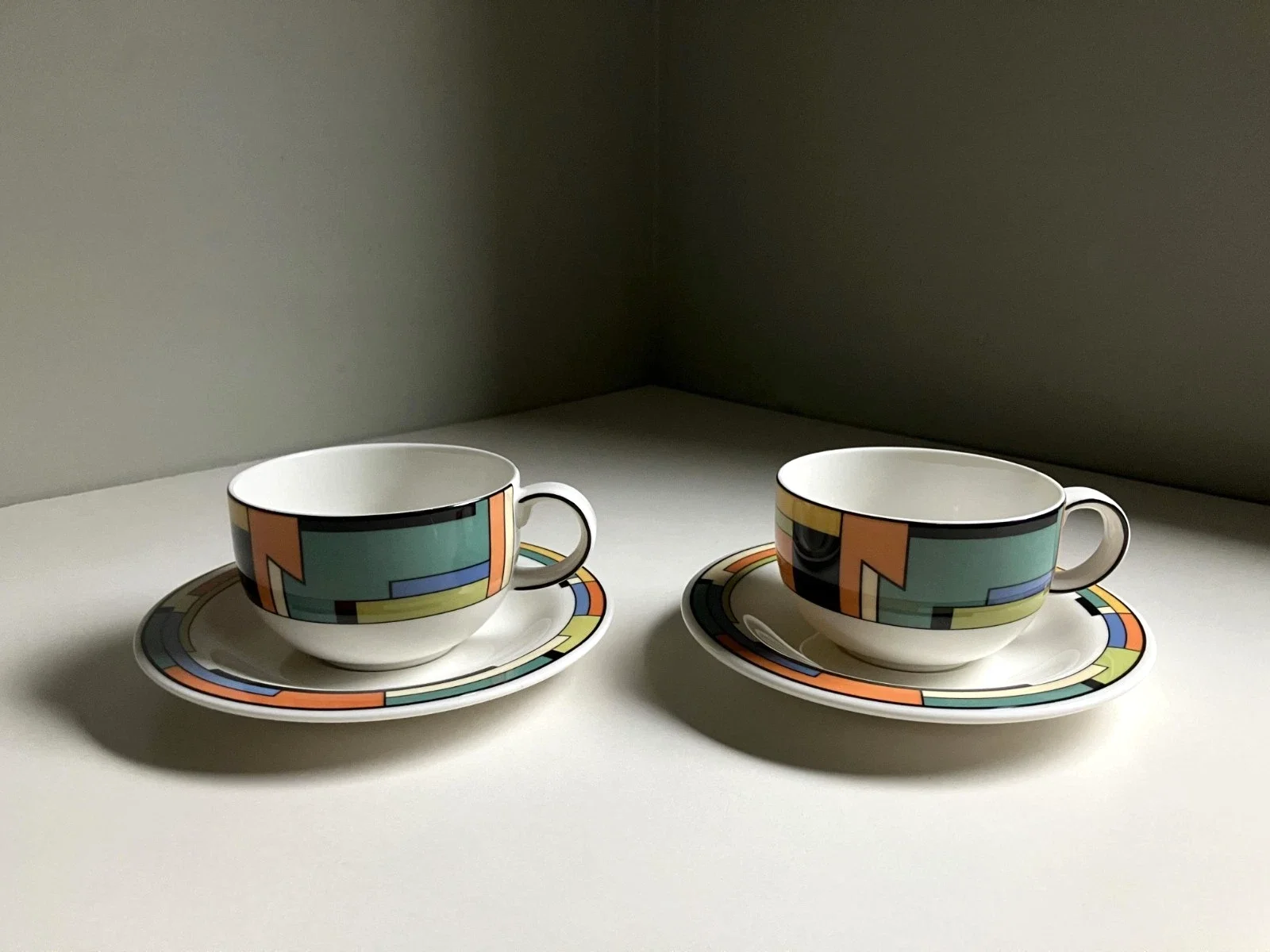
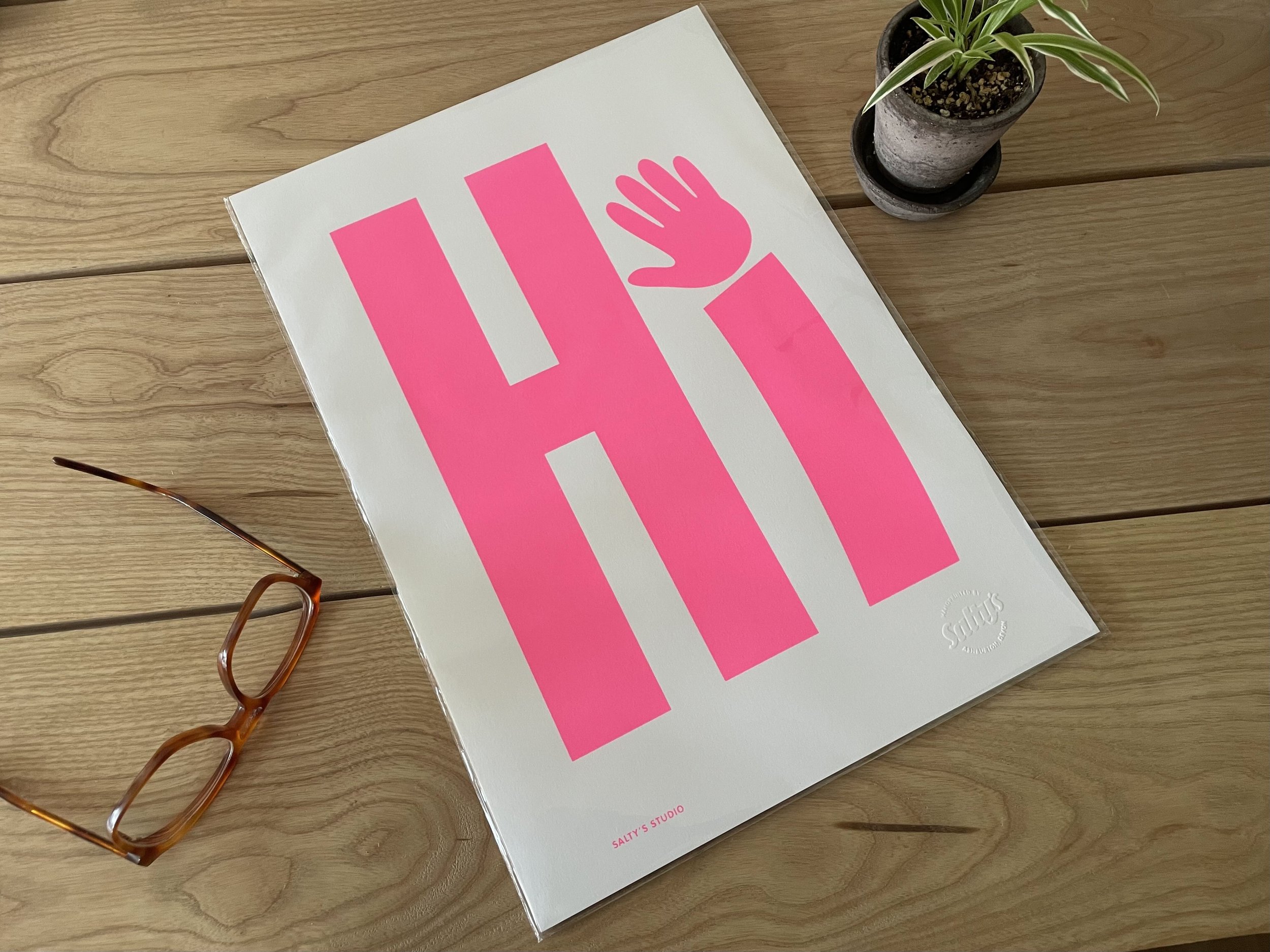
Salty’s Studio creates a lovely range of designs which find their ways onto greetings cards, prints, mugs and tea towels. Most of the designs have a west country slant. Do you have a strong opinion on cream tea etiquette? Salty has you covered. Want to represent your ends? Ditto (as long as you mean a river not a postcode.)
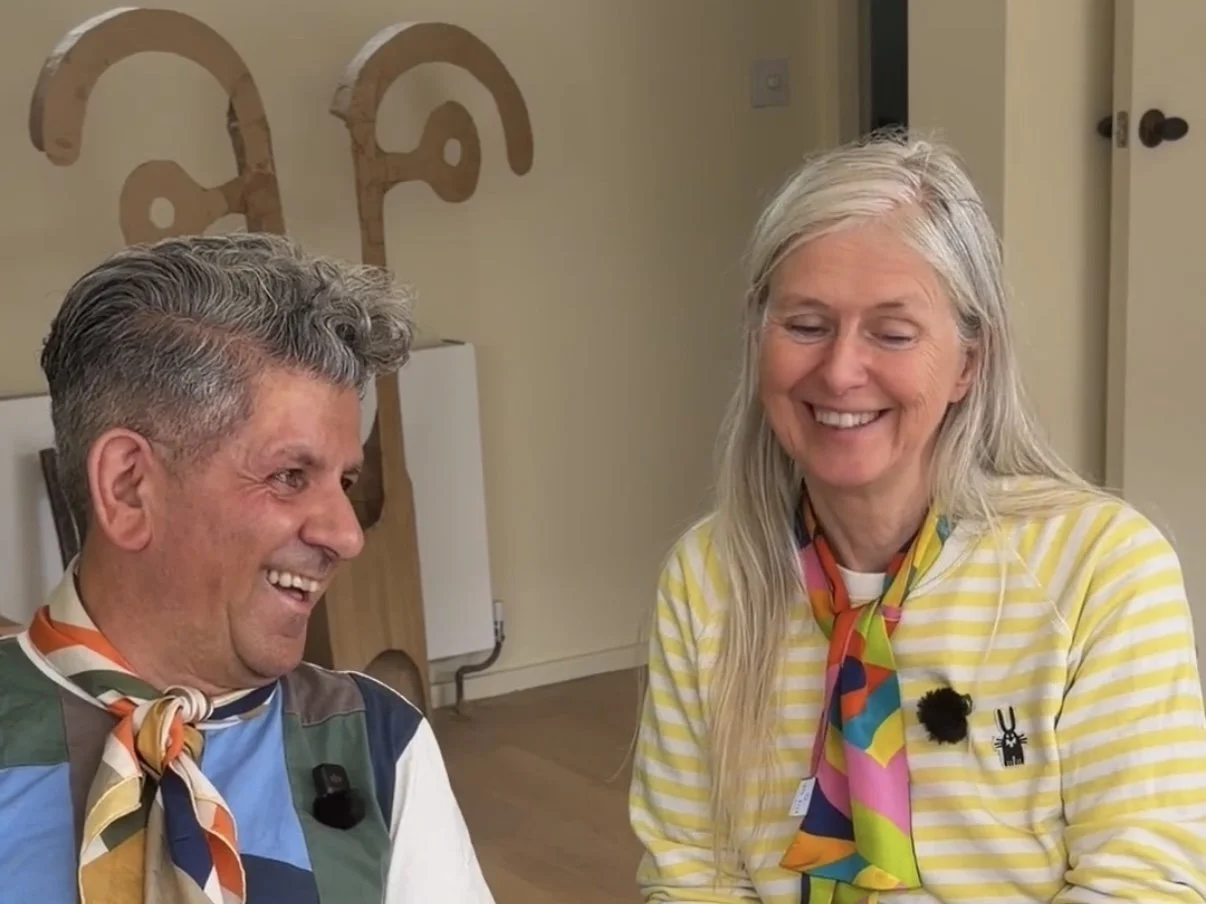
Jim Salter - the eponymous Salty - explained to me that in this one room he designs at the counter on a large Apple monitor; he screen prints in a workspace behind a partition one one side of the room and then displays everything for sale on the other side. All beautifully streamlined.
Not only are the designs top notch but Mr Salter also does his bit for the planet, printing on recycled card and wrapping in compostable film.
This is yet another reason why supporting independent makers and artists makes sense: compared to big brands, they’re more likely to sacrifice a little profit to maintain a principle. When it’s your name above the door, it matters.
Want to be more Decmatic?
Want a nourishing shot of inspiration and ideas like this injected directly to your inbox every week? Subscribe for free here >
Make your own: Red-Blue chair
Category: Make it yourself
The Red and Blue from Cassina
Gerrit Rietveld’s Red-Blue chair is a stone cold classic. At least it is at Decmatic Towers. In fact, Mr Reitveld is possibly my favourite designer/architect. In addition to the bomb that is the Red-Blue (designed in 1918), he also created the Berlin (1923), the Zigzag (1932) and the Steltman (1963). Hit after hit.
If you followed any of the above links you’ll have realised that many of Rietveld’s furniture designs are still being produced by offical licence holders. The prices are, for most people, prohibitively high.
But fret not, thanks to the simplicity of many of his designs and the handy plans in this book, you too can make your own. Which is what I did a few years back and I’m really happy with the result. Here’s my (unpainted) Red-Blue.
I used the most basic of materials because I saw the exercise as a trial run for a more serious attempt once I’d learned from my mistakes and improved my carpentry skills. But despite that, the result has lasted well and been used regularly. It’s surprisingly comfortable. The trial run turned into the finished article.
I might, at a later date, create a more detailed walkthrough. If that sounds useful, drop a comment below. But for now, here are the frames from an Instagram Story I produced a while back. It should give you an idea of the process.
Happy building!
Want to be more Decmatic?
Want a nourishing shot of inspiration and ideas like this injected directly to your inbox every week? Subscribe for free here >
Decmatic Loves: Vitsoe
Category: Invest in quality
We love Vitsoe. It typifies Decmatic’s Rule #1: to invest in quality that lasts. On that topic, here’s what I wrote when I posted to Instagram a while back:
“I say invest but Vitsoe is surprisingly affordable compared to many iconic storage options. And it’s flexible enough for you to take it with you when you move, which makes it not just more sustainable but more economical too.”
And, honestly, how can you not love it? There are so many reasons. It looks great:
The modular system is so simple to mount and use. There’s not much more too it than screwing the vertical tracks to the wall:
I say simple, but the floating pins that support the shelves and other elements can take a little time to master:
Shelves can be mounted in two orientations, depending the intended use and position in the overall design. Meaning you can reconfigure if or when your needs change.
And you can add more pieces really easily. Can you spot the extra shelf, below?
I added this new shelf on the left a couple of years after installing the original configuration. Because records, obvs.
Note to self: must tidy up this little corner 😬
Want to be more Decmatic?
Want a nourishing shot of inspiration and ideas like this injected directly to your inbox every week? Subscribe for free here >
Ikea: deep cuts and b-sides
Category: Buy Second-hand
I have a love-hate relationship with Ikea. I like that they prioritise good design. The prices really are fantastic value. And who doesn’t love a meat - or plant - ball? But the corollary of the affordability is that if, say, a chair costs £20 then there’s little economic incentive to resell it, if or when you get bored with it or your circumstances change. It feels like the furniture equivalent of a fast fashion £5 top.
But high cost is not the only way to deliver quality that lasts. Quality can also show up as the kind of good design that people appreciate and choose to hold onto, year in year out. Alongside a sea of anonymous products that could be found in any number of other home stores, Ikea also manages to keep delivering hits: designs that through their simplicity or quirkiness or just a certain something makes us remember them.
A quick google search will reveal that the second-hand market for vintage Ikea is a popular topic in the media. Click-minded journalism tends to focus on the eye-watering prices quoted on 1st Dibs and Pamono for a handful of star items. The go-to product in this kind of coverage is Ikea’s 1993 collaboration with superstar designer Verner Panton: the Vilbert chair.
The Vilbert might have become a cliché, but there are plenty of other items worth searching out in Ikea’s extensive back catalogue which won’t set you back thousands, especially if you hunt around on eBay and Etsy. Here are some of my current favourites.
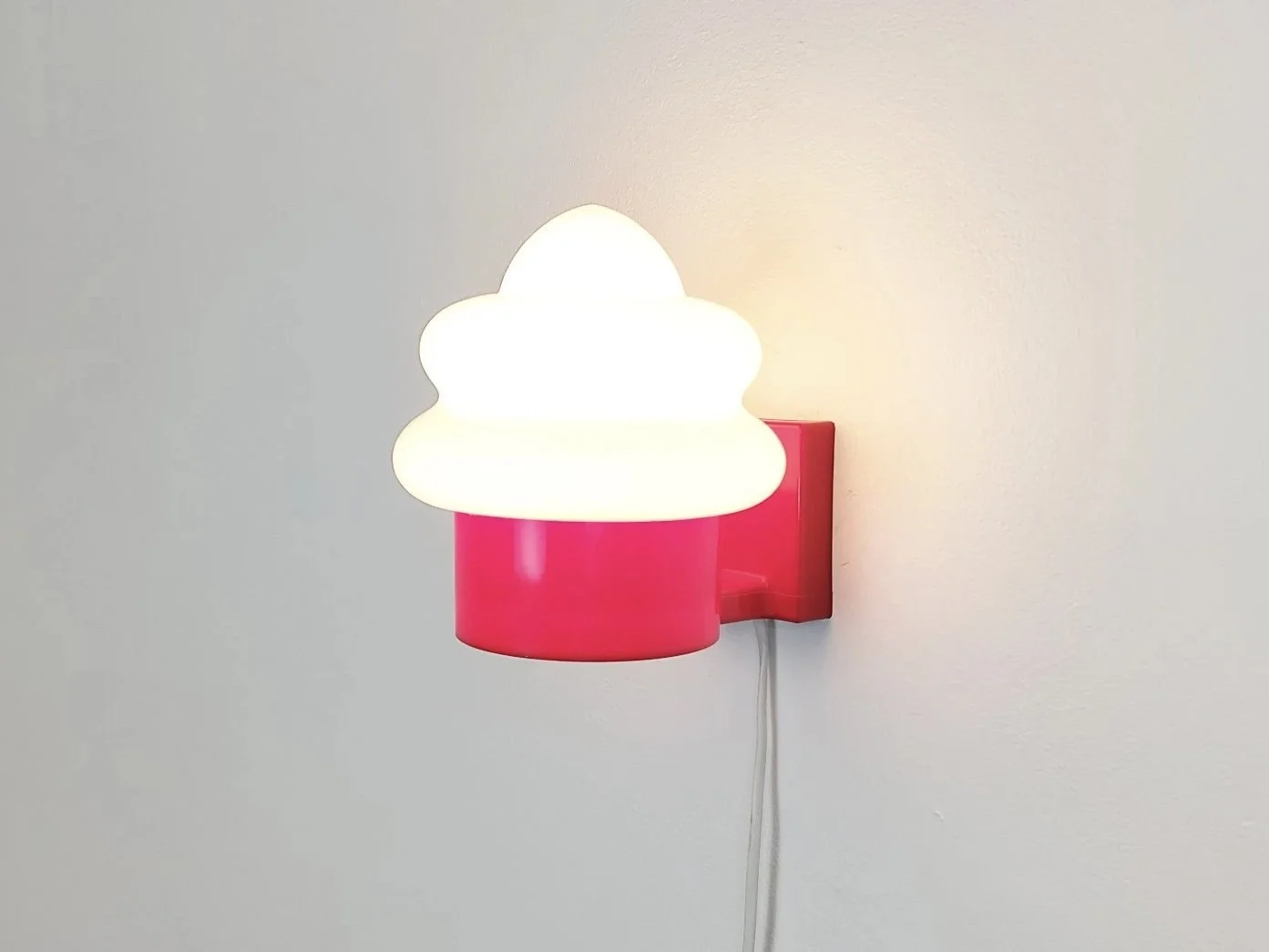
Lamp B9102
I picked this up a couple of years ago. A £20 special. They’re still relatively cheap, perhaps because they appear to have been neglected from day one: no named designer, not even a product name. As far as I can see, they were only ever referred to by their stock number. Despite its Cinderella status, I love its colourful simplicity and the way it lights up this little corner of my flat. And I’m sure these were inspired by Memphis, another reason to love them. More on Memphis another day.
Kila
I can imagine this might polarise opinion. It looks a bit like a three legged dog. In fact people often list it as “red dog lamp”. But according to this reel, Harry Allen, the lamp’s designer, was a keen rollerskater, and the tripod wheels allow the lamp to pull off the spin Harry was aspiring to perfect on his skates. Either way: cute.
Iviken
I don’t have one of these but I really want one. Possibly from the 90s or early 2000s, these give (me) 70s vibes. Whatever, they’re fun and in the right spot will lose any hint of kitsch, I’m sure. Also, they remind me of a shop I used to walk past everyday in Soho. It sold all sorts of props for commercial shoots and in the window they displayed small piles of “stunt” ice: very realistic looking plastic ice cubes. This looks like a giant version of those stunt cubes.
Frekvens speakers and lights
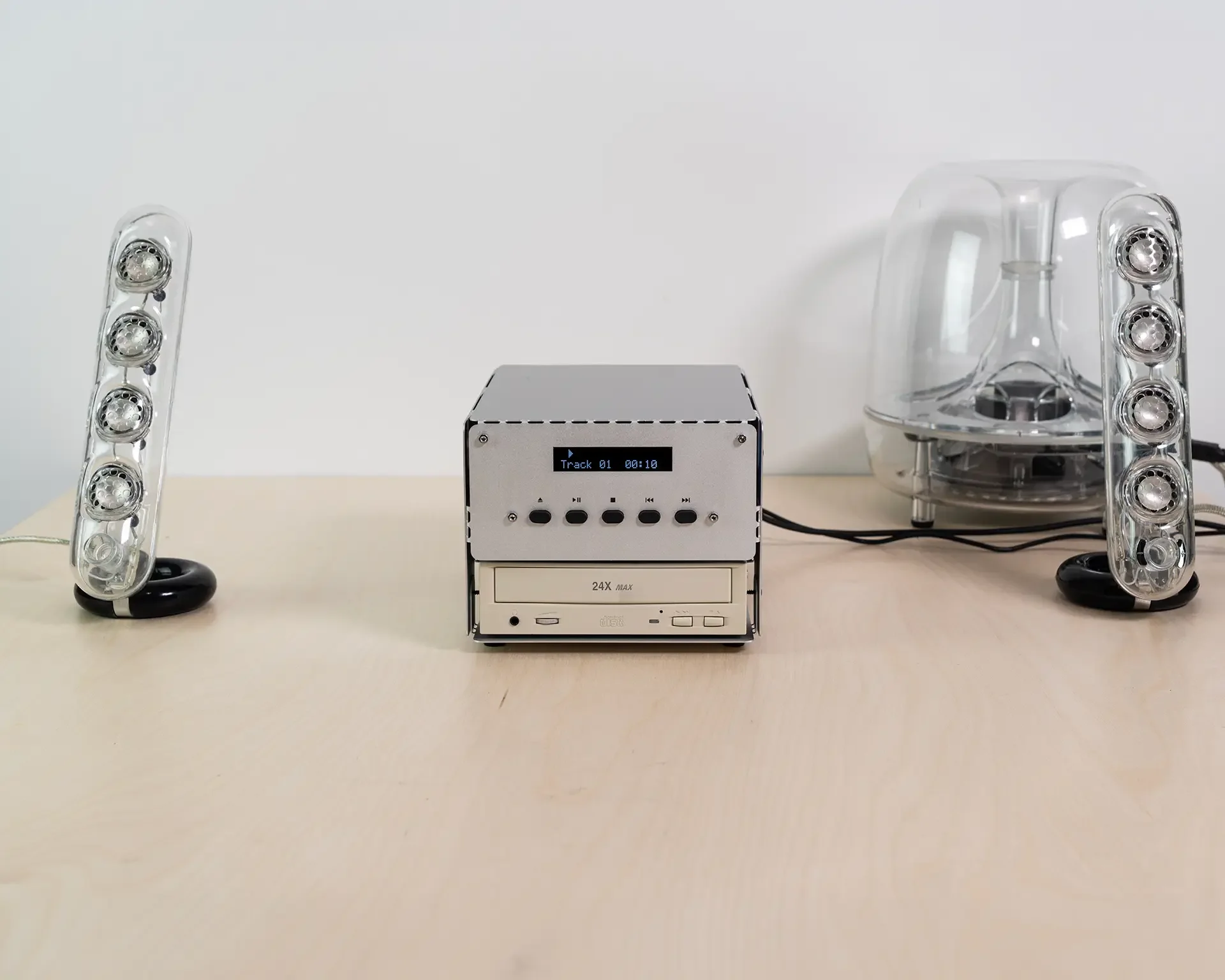
These form the core of a slightly schizophrenic range under the Frekvens umbrella. I say schizo because alongside the speakers and lights designed by Swedish audio wizards teenage engineering, there are a few other items, all created in house or by other designers: mugs, bar stools, picnic blankets, all manner of party paraphernalia. It sort of makes sense but at the same time it’s just a bit weird.
I was only interested in the TE products. I saw them promoted when they were released in 2020 but they weren’t available online and I didn’t get my shit together to go to my nearest store (also, there was the small detail of a pandemic going on). Then, like all limited editions, they sold out. I snoozed and I losed. No matter, they turn up occasionally on eBay. I grabbed this speaker a while back and it’s been brightening up my kitchen ever since. I love all these products for the geometric lines and colour pops typical of Teenage Engineering. I also love that they form a modular system with various accessories that you can snap on or swap out.
And if that wasn’t cool enough, TE offered (and still offer) files to 3D print even more accessories.
Don’t worry, if you don’t have access to a 3D printer, there are enterprising people on eBay who will print some for you.
Neils Gammelgaard’s greatest hits
Unlike poor orphaned B9102, Ikea often name-checks its products’ designers. One name that keeps showing up on my radar is Neils Gammelgaard. During a thirty year relationship with the brand he designed a number of standout pieces. His Jarpen wire armchair is currently enjoying it’s second reissue, this time under the name of Skalboda. And the Guide shelves he designed in the early 80s are into their third incarnation.
Not currently available instore but worth digging around for are his pieces from the Moments range, particularly the dining table, the coffee table and, best of all, the sofa. Admittedly, the prices for the latter are nudging into the “oh-my-gawd-look-how-expensive-these-old-Ikea-things-are-nowadays” style press articles, but I couldn’t not mention it because, according to Neils’ website, it was the world’s first flat-packed sofa.
How cool is that?
There are other things that get me excited - the Diana safari chair, for example, and the Impala armchair - but this is already far too long.
So what floats your Ikea boat? Drop a comment below with any top tips, I’d love to hear them.
Want to be more Decmatic?
Want a nourishing shot of inspiration and ideas like this injected directly to your inbox every week? Subscribe for free here >