Hello, Josef Albers
Category: Make It Yourself, Buy Secondhand
Josef Albers was a German artist and educator. He taught at the Bauhaus during the 1920s and in 1933, when it was forced to close by the Nazi’s, emigrated to the US with his wife Anni, an educator and influential artist in her own right. There, the couple continued teaching, first at the new and experimental Black Mountain College and later, in Josef’s case, at Yale.
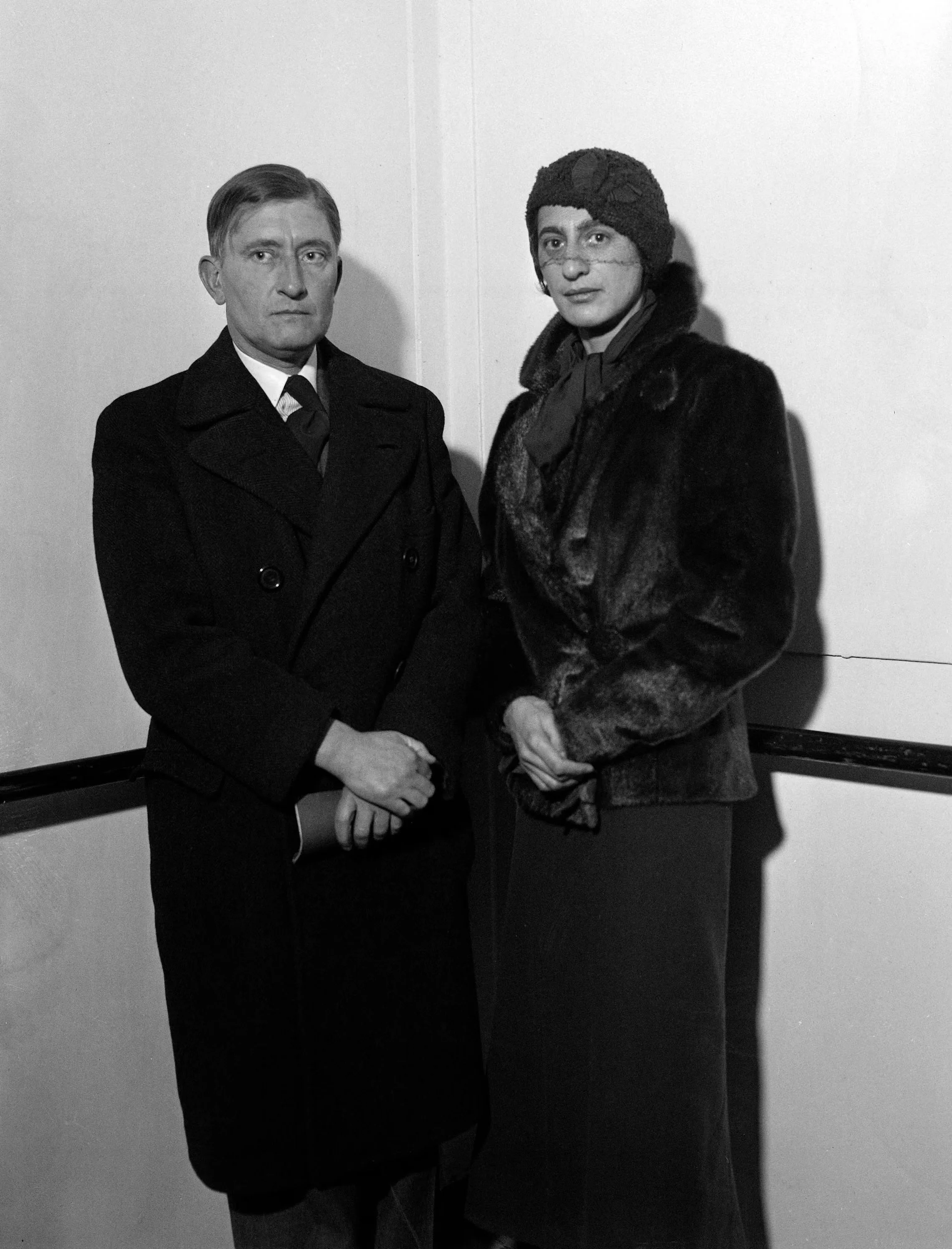
Anni’s textile work is my favourite of the two artists’ output, but today it’s all about Josef. (Stay tuned for an Anni Albers post soon. In the meantime, there’s more at the Albers Foundation website and in this very brief teaser of the recent joint exhibition in Paris.)
The reason I’m focussing first on Josef is that his work is more immediately applicable to our DIY projects. To be more specific, our art projects, if you’re that way inclined. (It’s perhaps no coincidence that his use of colour and geometric shapes is a style I gravitate towards in my own efforts. Yeah, I’m biased :-)
He is perhaps most known for his series Homage to The Square, hundreds of iterations of squares within squares in different combinations of colours.
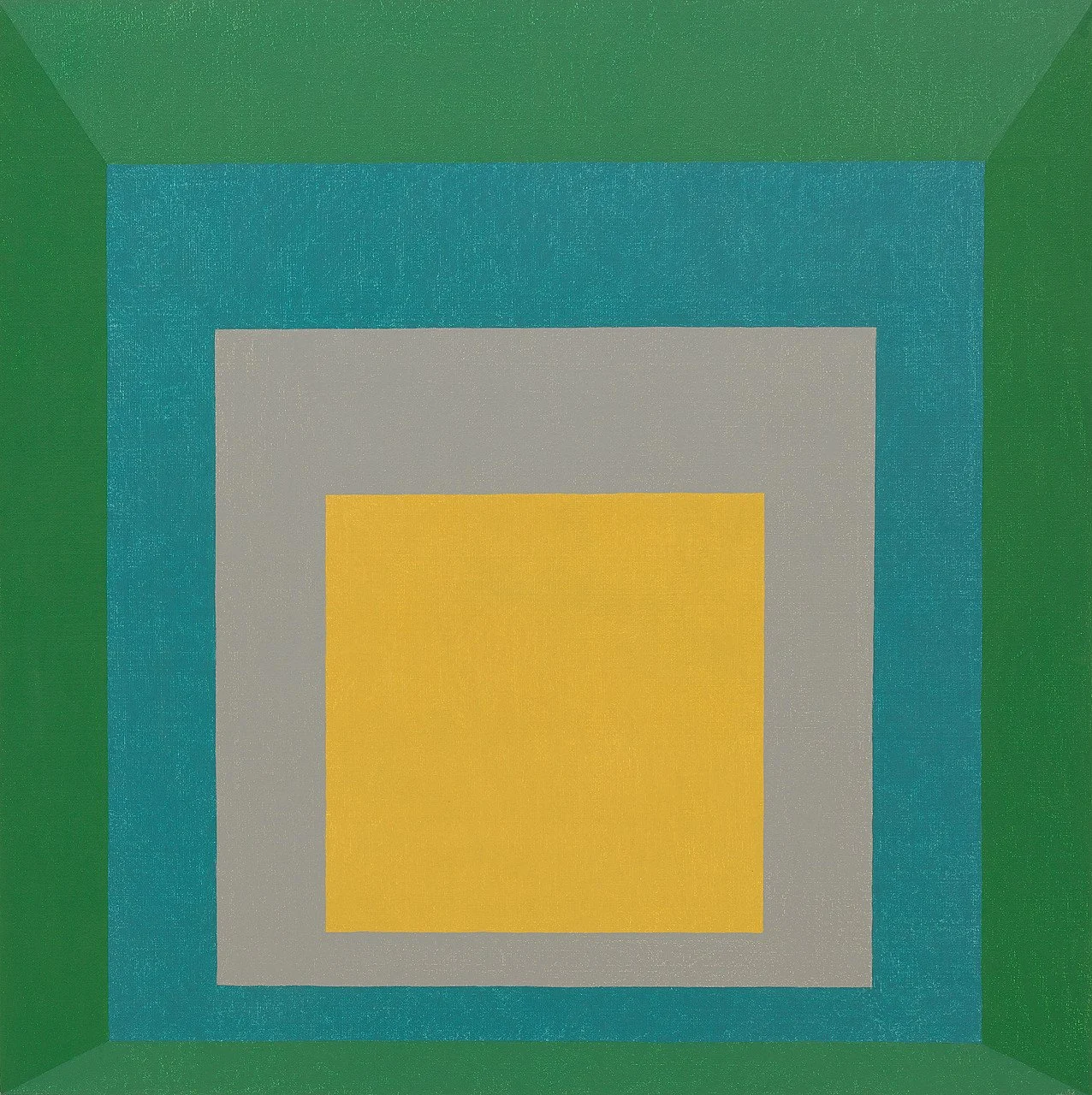
Homage to the Square: Apparition, 1959 (Solomon R. Guggenheim Museum)
Like much of his work, it was both an exploration and illustration of his ideas about colour and how we perceive it. This short documentary from David Zwirner opens with some lovely archive footage of Albers himself with a number of iterations of Homage to the Square.
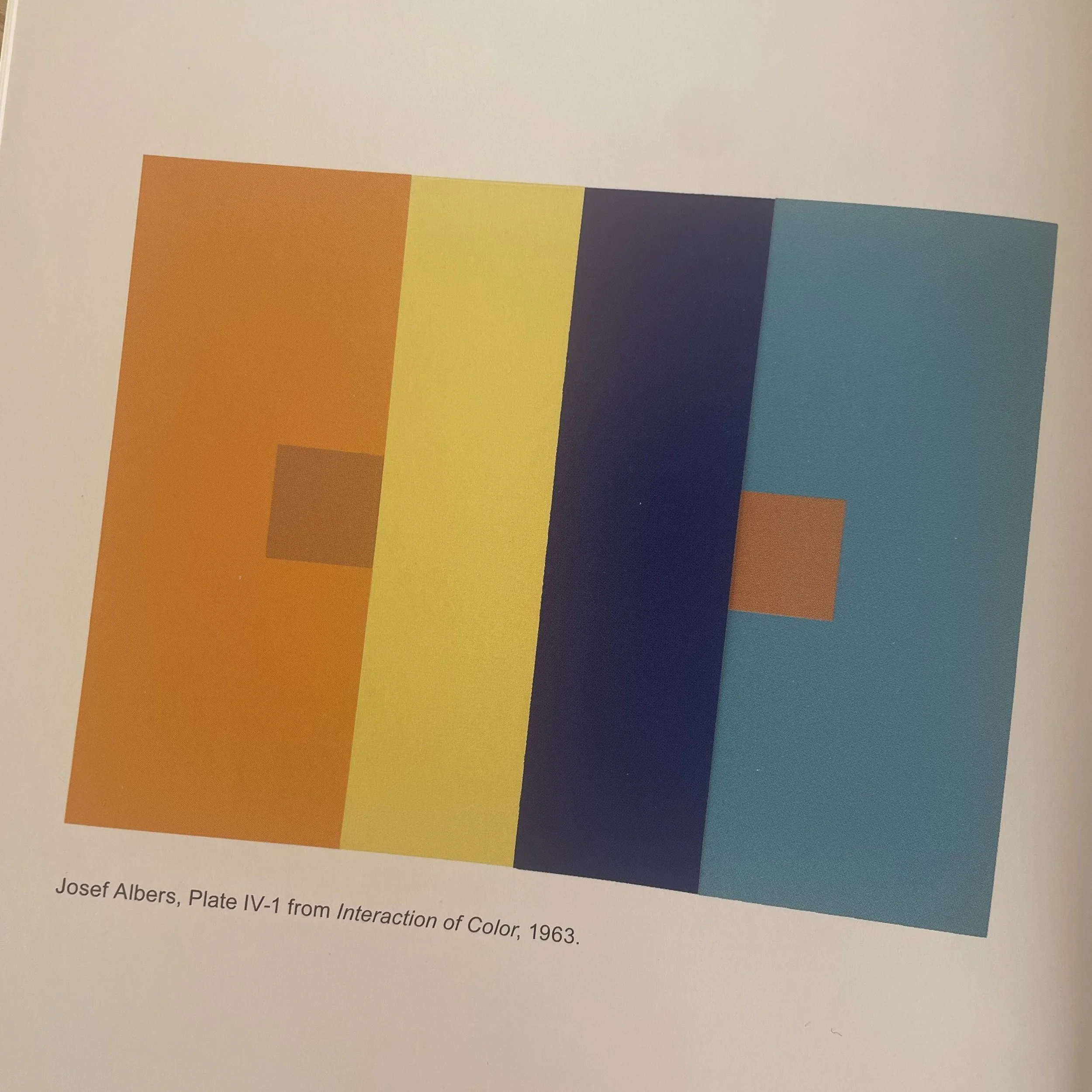
In 1963, he published Interaction of Color, a set of twenty exercises for students and educators based on his teaching practice. At the heart of these experiments was the idea that colour is, in a sense, an illusion; that our perception of a colour is relative and changes depending context in which we experience it. In the picture below, the two small brown squares are the same colour but appear different relative to the blue and yellow.
If you fancy picking up a copy, there was a sumptuous, expanded two volume edition in 2009, great if you a have a couple of hundred to drop on a book. At a more affordable price, a paperback was released in 2013 to mark the 50th anniversary.
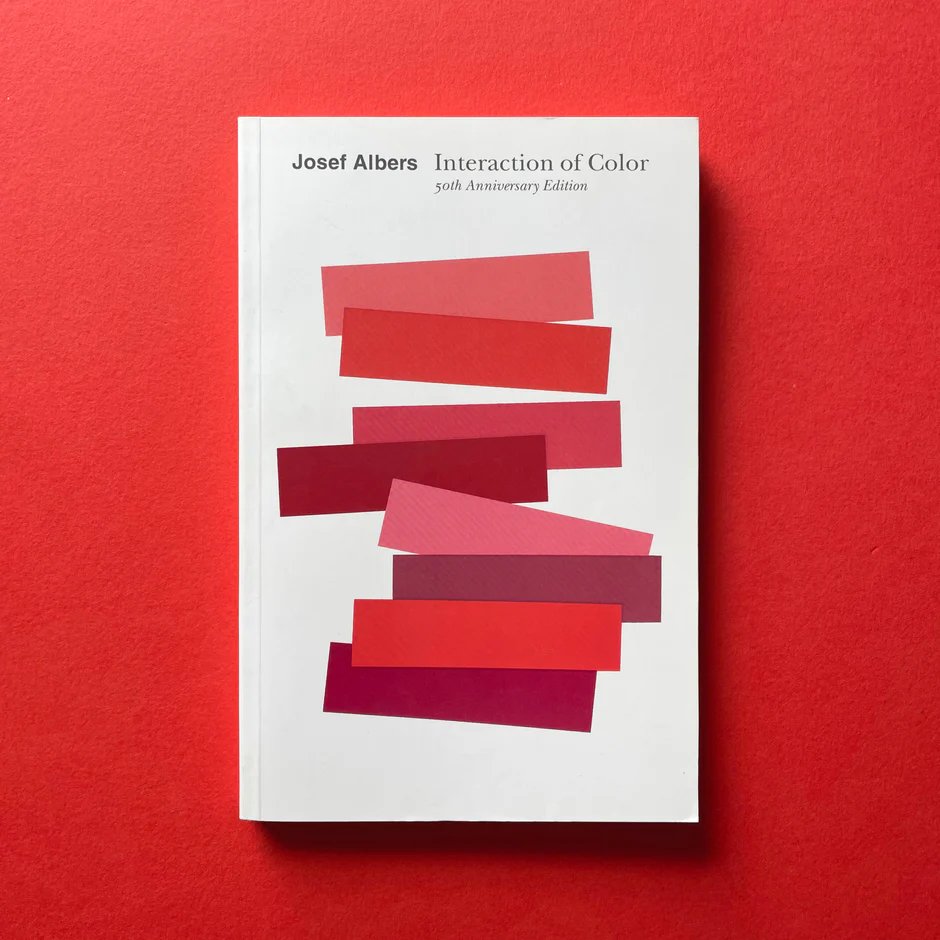
I picked up this companion text comprising eight of the original twenty exercises, thinking it might provide some inspiration for some of my own experimentation.

Albers’ approach is to pose questions rather than provide answers, the idea being to find juxtapositions and contrasts - in hue, saturation, temperature - that create effects for us, rather than prescribing certain combinations.
Many of the exercises that he proposes use sheets of coloured paper. Being impatient I didn’t want to wait for Cass Art to open so used what I had in the flat: numerous sheets of coloured tissue paper from a previous project. (More on that some other time.)
Also, my impatience meant I jettisoned Albers’ exercises pretty quickly and just messed about with combinations of colours and shapes that appealed.
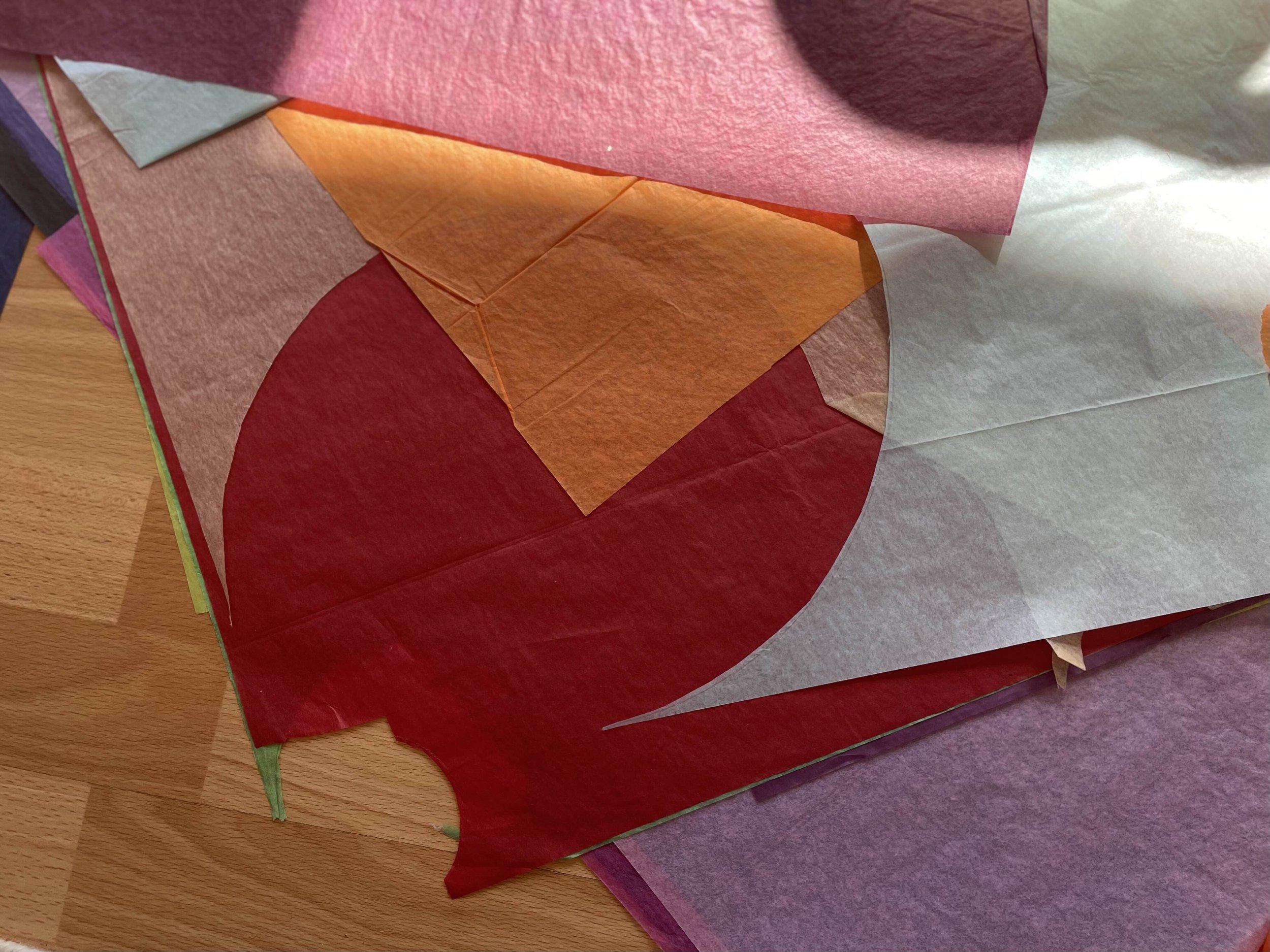
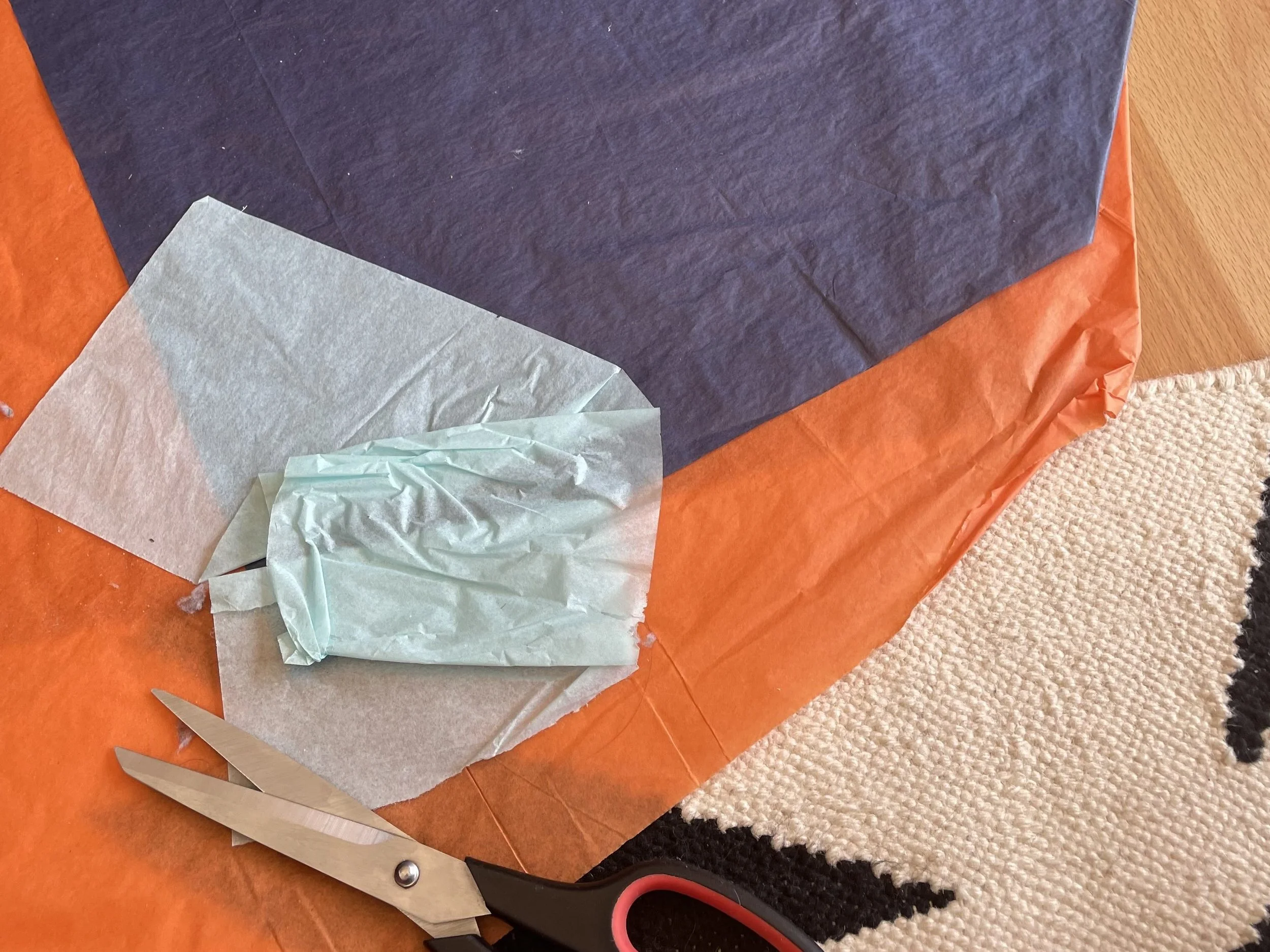
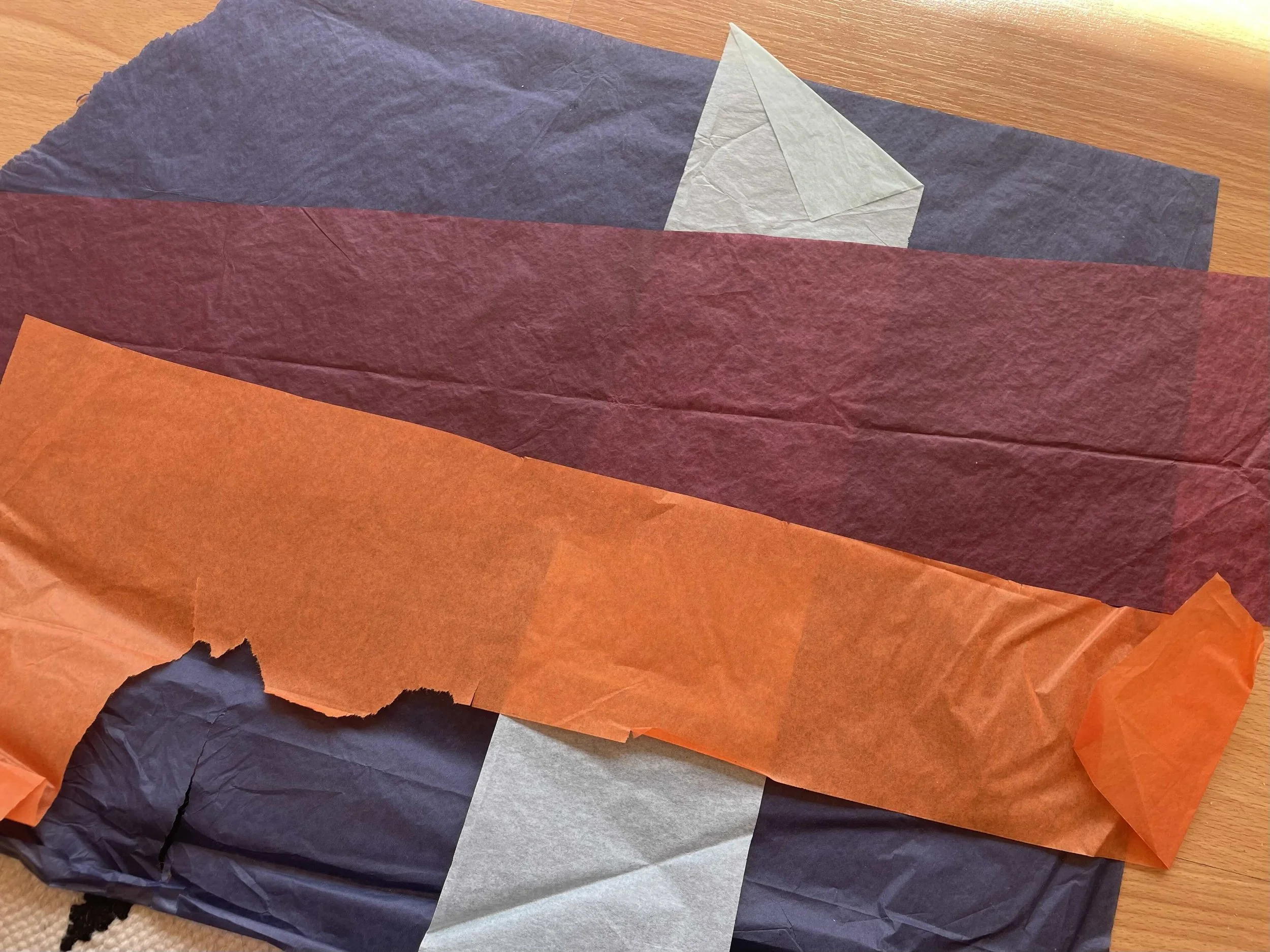
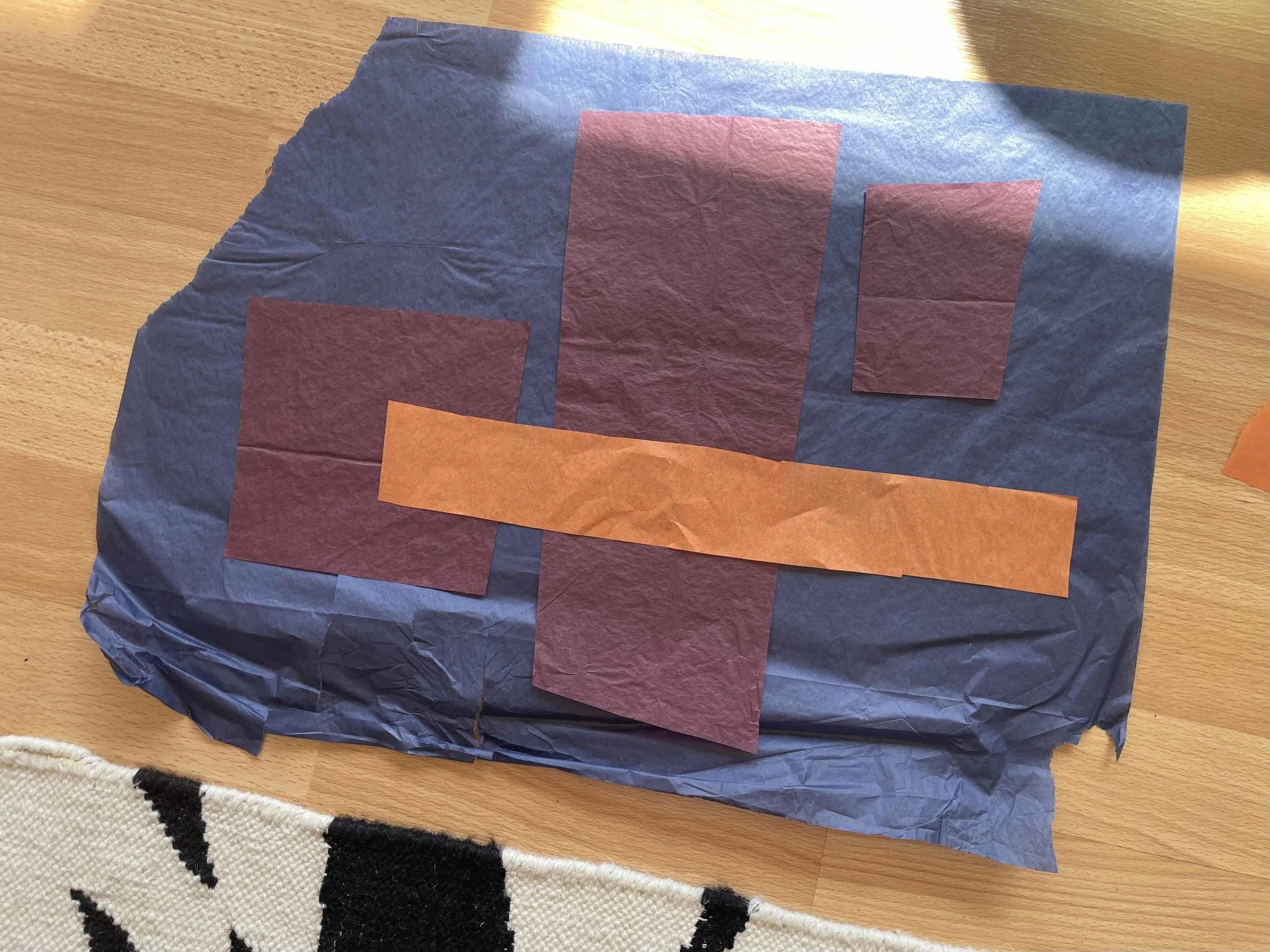
If you’re not into making it yourself, and not everyone is, you could consider a very short shortcut to getting some Josef Albers on your walls. In the late 1950s, commissioned by a former student, Albers began designing record covers. There’s a fairly comprehensive list here.
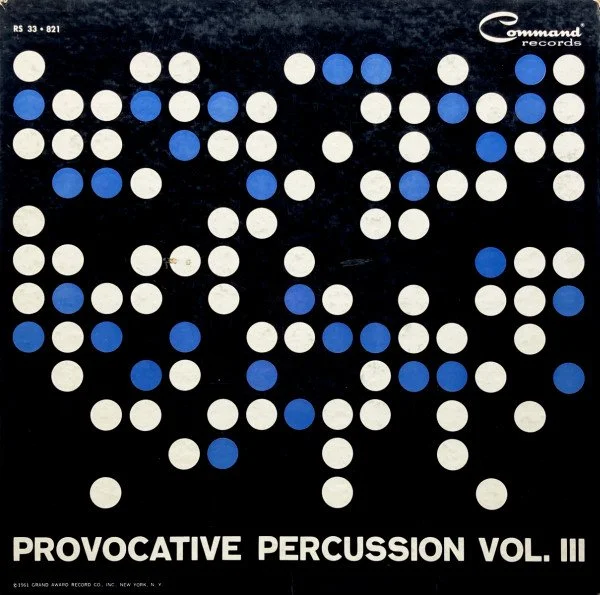
Provocative Percussion Volume 3, Enoch Light And The Light Brigade (1961)
They’re relatively easy to pick up second hand (there’s a list of vinyl copies for sale in the UK here) and then all you need is a frame that’s designed to display records. Having said that, I’m struggling to find an example that is suitably Decmatic. The best I can find, one that looks like it might last, like it could withstand some changes of location, is one that doesn’t even display the entire sleeve.
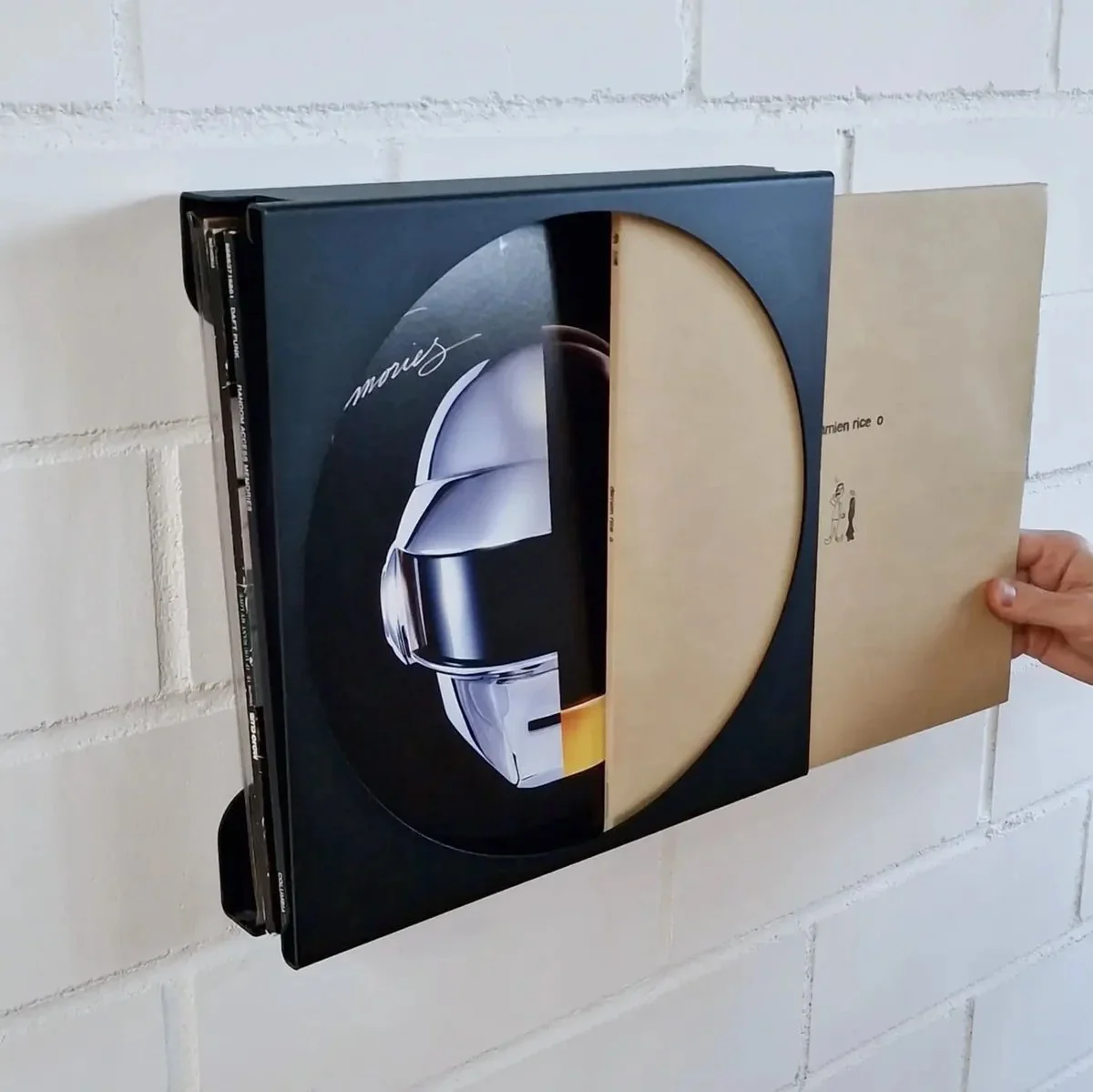
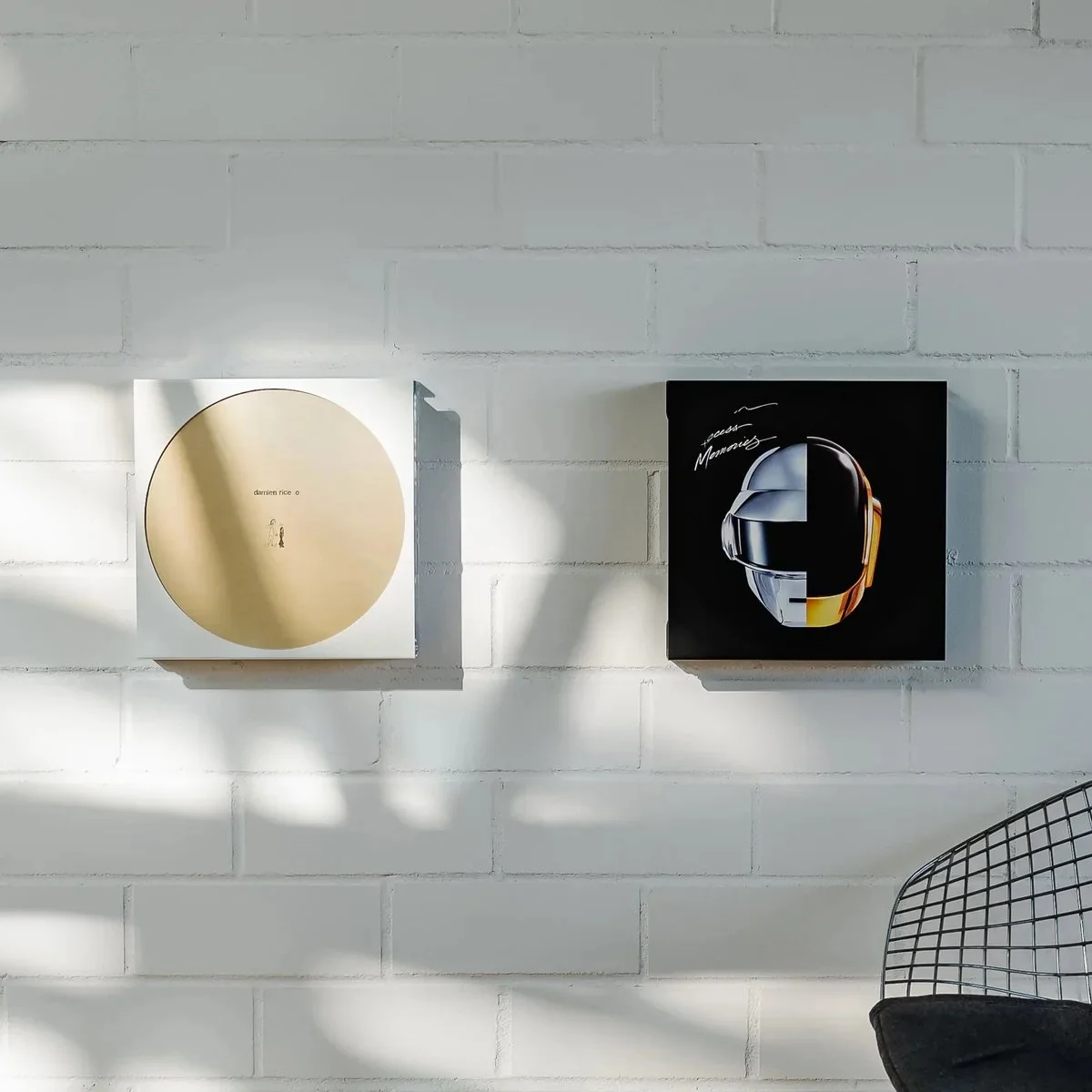
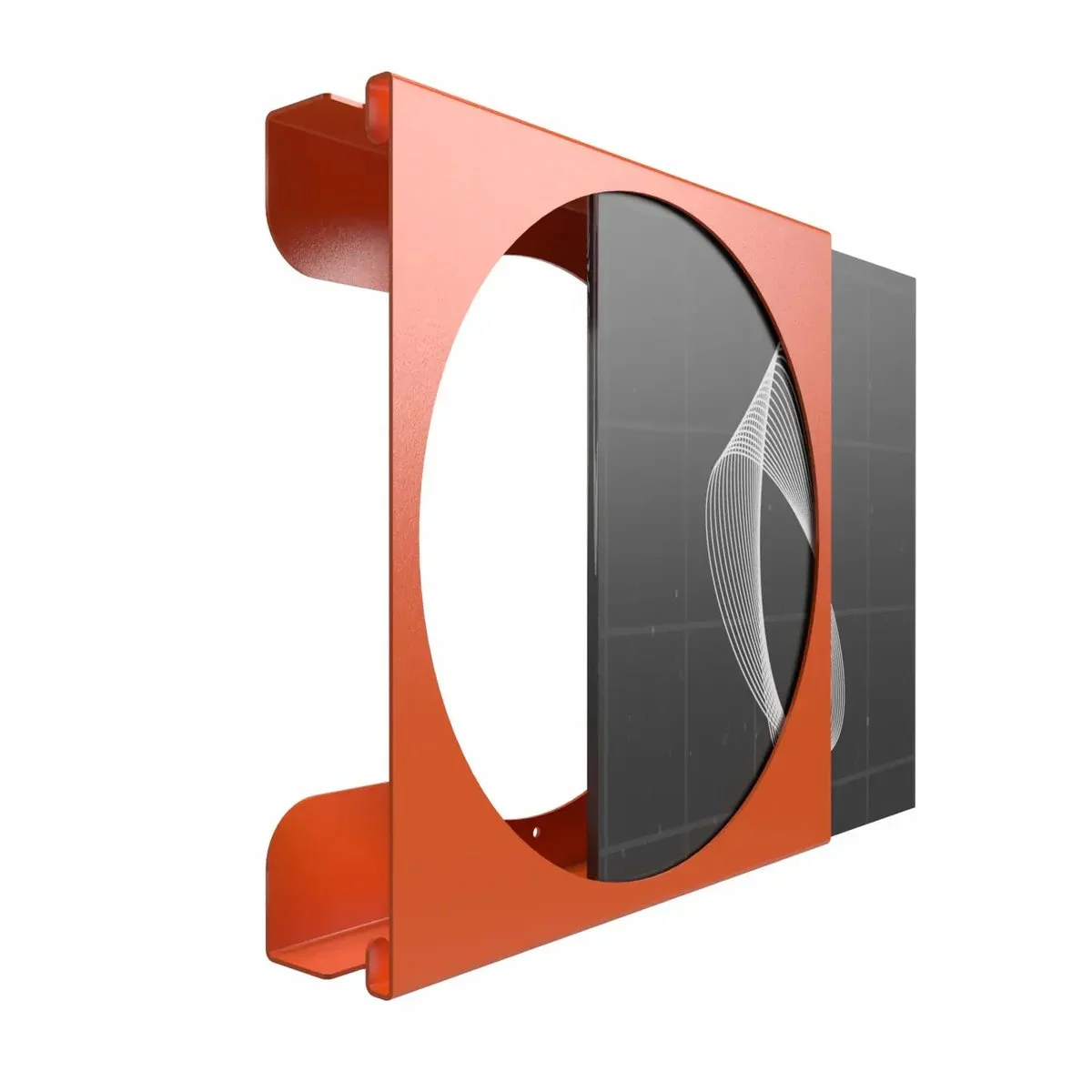
So it only displays a circular section of your chosen record? I really don’t understand the logic but at least it looks well constructed and comes in a Decmatic-approved orange, alongside black or white. Perhaps your chosen Albers cover art would look great in a circular frame. £54 from Flate.
I’ll share the results of my Josef Albers inspired art experiments when they’re completed. Stay tuned!
Want to be more Decmatic?
Want a nourishing shot of inspiration and ideas like this injected directly to your inbox every week? Subscribe from free here >